I made a series of instructional videos for a handful of Middle School students during the pandemic. I was told they were useful but I was never aske to make any more.
Hobby: Water Sampling and analysis
April 19, 2024
DIY Bio, Hobby Water Quality Analysis Leave a comment
A composite of other people’s music
April 19, 2024
In order to hear progressions in a chord that I haven’t heard before, it’s useful to mix music the way Private Label wineries do with wines they didn’t create. As long as the tempo and key are the same, I’ve created sounds that give me ideas.
I can’t claim these as anything but plagiarized from four talented Pond5 composers but I’m not familiar with anyone advertising that they use this technique.
Ode to the O’O
April 19, 2024
Music Music, O'O bird of Hawaii Leave a comment
The last Hawaiian O’O bird was recorded in 1986. When the person who recorded it rewound the tape to listen to it hours after the bird had flown away, the excited bird immediately flew back expecting to find another of his species.
I wrote this music when I heard that story.

I used an app called KeyFinder to get the key of the bird-song. I used HookTheory to find the most popular chord progressions in that key and output the basic structure to MuseScore to finish it up. Several riffs are purely my own, but I can’t say I actually “composed” anything. It was more like I “put it together”.
Social Network Analysis of Language Revitalization
April 19, 2024
Linguistics, Social Network Analysis Language Revitalization, Networks, Social Network Analysis Leave a comment
My baby brother got his PhD at the University of Oregon in Eugene in Linguistics. He was originally trained as an engineer but since the late 1970’s he’s been recording first speakers, documenting and teaching the Native American language of the Puget Sound region (Lushutseed).
In 2020 we were discussing ways in which tribal language programs could have something other than anecdotal evidence of their impact and landed on Social Network Analysis.
We fielded a survey of Lushootseed speakers asking the to list people they spoke the language with and asking their interlocutors to participate in the survey (called a “name generator” in the parlance of survey design).
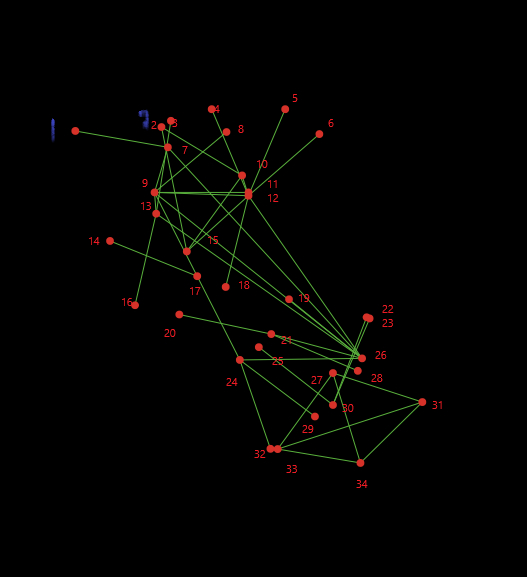
Since our initial findings, we’ve taken the idea to a team of professors at the University of Oregon departments of Linguistics and Sociology.
Together, we have received funding from the University to develop a proof of concept for applying these methods to language programs engaged in language revitalization.
The team’s findings are currently (2024) scheduled to be presented to conferences in Scotland and Santa Barbara.
Our first paper targeted beginners in the field in language revitalization programs.
 jzahir
Recent Comments