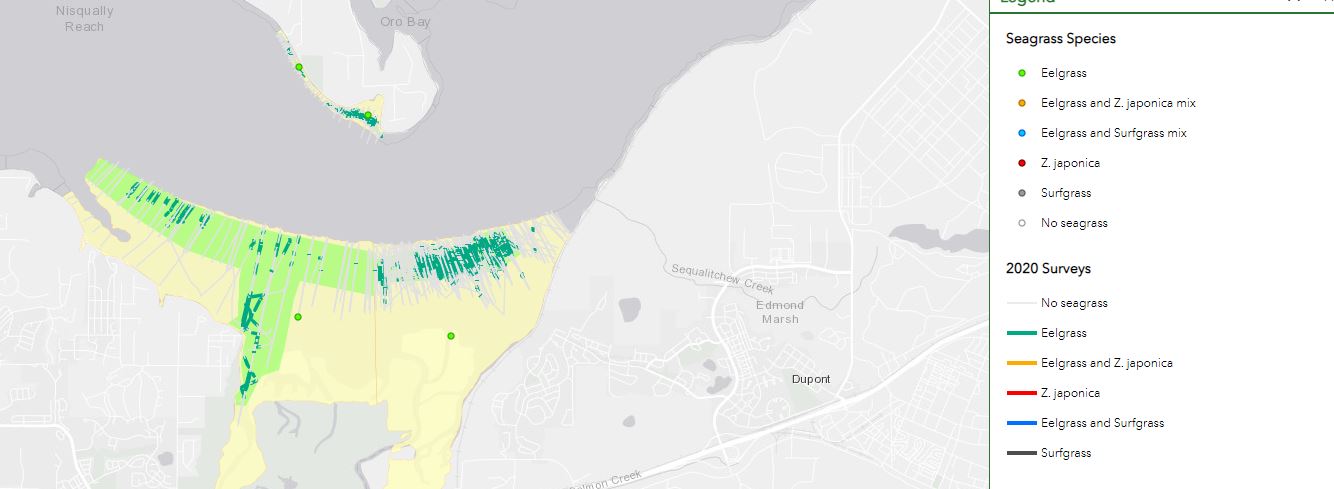
In my study of the littoral environment in Southern Puget Sound, I was struck by how few land use or environmental remediation plans consider eelgrass (Zostera Marina) fields. The liturature on the ability of these fields to sequester carbon is mixed but I think the studies being done in warmer climates show the least favorable results.
In late April 2024 I decided that rather than study the soils under eelgrass to see how much in situ sequesterd carbon there was, I’d test the uptake of CO2 in the lab (in vitro) over it’s life cycle.
The nature of the experiment was to have enclosed marine and atmosphic environments where I could introduce CO2 into the atmosphere. I would use UV light to sterilize an eelgrass rhyzome and grow it using sterile seawater and a sterile atmosphere. Then, I would introduce and monitor the CO2 in the air and the pH in the water to measure the dynamics of CO2 uptake (assuming there wasn’t anyting else with chlorophyl in it). I figured I’d have to grow a lot of eelgrass before I figured out how to get the experiment to work but that every failure would be an opportunity to learn more.
 jzahir
Leave a comment